Kinfolkly Workshop
16,000+ Step-by-Step Plans Cut Lists in Every PDF 60-Day Money-Back Policy

Outdoor Woodworking

Backyard woodworking projects for beginners, and how to actually finish one this summer.

Planter boxes, garden benches, potting tables. The reason most first-time builds stall is not skill, it is the plan.

In short

  • Most builds stall because the plan is incomplete, not because the skill is missing.
  • A real plan covers cut list, diagrams, materials, step order, and tools.
  • For beginners, one organized library beats free pages scattered across the web.

By the Kinfolkly Workshop editorial team Updated May 23, 2026 7 min read

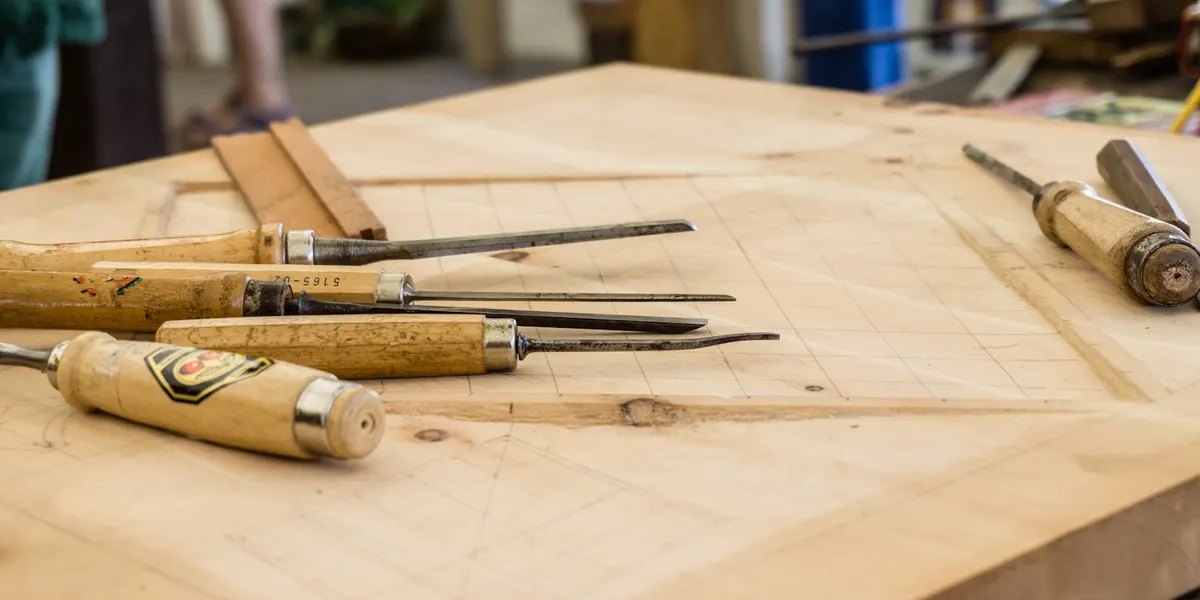
A woodworking bench with hand tools laid out, ready for a summer project

Every summer, the same idea shows up: this is the year you finally build something for the backyard. A planter box by the steps. A bench under the tree. A small table for morning coffee on the porch. The desire is the easy part. What stops most people is the gap between wanting to build something and knowing exactly how. This guide walks through how beginners close that gap, what separates a plan you can actually follow from one that leaves you guessing, and which backyard projects are realistic for a first summer in the workshop.

Why most beginner projects stall before they start

Picture the usual path. You watch a few videos, sketch something on the back of an envelope, drive to the lumberyard, and buy boards based on a rough guess. Halfway through, a cut does not line up. A measurement was never written down. You are one board short and the store is closed. The project moves to a corner of the garage, and that is where it stays.

This is not a skill problem. It is an information problem. Video tutorials are built for watching, not for following at a workbench with sawdust on your hands. They rarely pause long enough to copy a measurement, and they almost never include a printable cut list. Free plans scattered across the internet are often incomplete, inconsistent in their units, or missing the one diagram you actually need. Beginners do not fail because the work is too hard. They stall because nobody handed them a complete map.

“The skill you need most is not experience. It is a clear plan to follow.”

What a good woodworking plan actually includes

A plan worth following does the thinking before you pick up a tool. At minimum, look for these five things:

  • 01 A full cut list. Every board and every length, listed before you buy. This alone prevents the most expensive beginner mistake: wasted lumber.
  • 02 Measured diagrams. Clear drawings with real dimensions, not artistic sketches. You should glance at the page and know the size of every piece.
  • 03 A material and hardware list. Screws, glue, finish, and fasteners counted in advance, so a single trip to the store covers the whole build.
  • 04 A step sequence. Assembly in the right order, because attaching the wrong piece first is a quiet way to ruin an afternoon.
  • 05 A tool list. So you know before you start whether a project needs only a drill and a saw, or something more.

When a plan includes all five, the project stops being a gamble. You are no longer inventing the build as you go. You are following a path someone already walked.

Backyard projects that are realistic for a first summer

Ambition is good, but a first project should be finishable. These backyard builds are forgiving, useful, and genuinely beginner-friendly:

  1. 01

    Raised planter box. Straight cuts, simple joinery, and an immediate payoff in the garden.

    An afternoon · Drill, saw, square

  2. 02

    Garden bench. A weekend build that teaches you stable, square assembly.

    One weekend · Drill, saw, clamps

  3. 03

    Potting table. Practical storage and a work surface, mostly flat panels and shelves.

    One weekend · Drill, saw, sander

  4. 04

    Birdhouse or feeder. Small, low-stakes, and a good way to practice before scaling up.

    2 to 3 hours · Drill, saw

  5. 05

    Porch side table. Compact, satisfying, and a piece you will use every morning.

    One afternoon · Drill, saw, square

  6. 06

    Outdoor storage bench. Slightly more involved, a good second project once the first goes well.

    One weekend · Drill, saw, sander, clamps

Notice what these have in common: clear shapes, repeatable cuts, no exotic tools. The point of a first summer is not to impress anyone. It is to finish something, learn the rhythm of measuring, cutting, and assembling, and build the confidence to take on more.

16,000+

Step-by-Step Plans

Cut Lists

In Every PDF

Lifetime

PDF Access

60-Day

Money-Back Policy

Recommended Resource

A single library of step-by-step plans, built for beginners and finishers alike.

The most complete collection we have come across: clear cut lists, measured diagrams, full material lists, and projects sorted from first-build simple to advanced. One-time download, instant PDF access, and a 60-day money-back policy if it is not a fit.

  • Full cut lists for every project
  • Measured diagrams, not artistic sketches
  • Projects sorted from beginner to advanced
  • Lifetime PDF access, downloadable to any device
  • 60-day money-back policy
See How the Plans Work

Affiliate link · We may earn a commission at no extra cost to you.

Free plans online vs. an organized library

Once you know what a good plan looks like, the question becomes where to get them. Two routes cover almost everyone.

  Free plans online An organized library
Completeness Inconsistent, plan to plan Same depth every time
Cut lists Sometimes In every PDF
Beginner path Scattered across sites Sorted by skill level
Long-term access Pages may disappear Yours, on your device
Time spent vetting High, plan by plan None, the work is done
Cost Free, but uneven One-time, refundable

Free works. It is slow and uneven. Quality swings widely from page to page, units switch between metric and imperial, and you spend more time vetting plans than building. A single, organized library trades that friction for consistency. When every plan you open is structured the same way, you stop relearning how to read plans and start simply building from them.

A finished wooden table built from a step-by-step plan
A finished build is the goal. A clear plan is what gets you there.

How to choose a plan library

A few things worth checking before you commit:

  • Does it include cut lists and measured diagrams, not just photos?
  • Is it genuinely beginner-friendly, with simple projects alongside advanced ones?
  • Do you get lasting access, so the plans are there next summer too?
  • Is there a money-back policy if it is not the right fit?

One widely used option is a downloadable library with more than 16,000 plans, organized from simple birdhouses to full furniture, with cut lists and diagrams included and lifetime PDF access. It is the resource featured above. As with anything, look it over and decide whether it matches how you want to work.

See the Plan Library

60-day money-back policy · Affiliate link

Common questions from first-time builders

Do I need expensive tools to start?

No. Most beginner backyard projects need only a drill, a saw, a tape measure, a square, and basic sandpaper. A good plan tells you exactly which tools a project requires before you begin, so there are no surprises. You can start with what you have and add tools as your projects grow.

I have never built anything. Can I really start with a backyard project?

Yes. Projects like a planter box or a simple bench are designed around straight cuts and basic assembly. The skill you need most is not experience, it is a clear plan to follow. Start small, finish one project, and the next one feels far less intimidating.

Are paid plans better than the free ones online?

Not automatically. The real difference is completeness and consistency. Free plans can be excellent or frustratingly vague, and you often cannot tell until you are mid-build. A well-organized library earns its cost by being reliable: every plan structured the same way, with the cut lists and diagrams a beginner actually needs.

How long does a beginner project take?

Most starter projects fit a weekend. A planter box or birdhouse can be done in a few hours. A garden bench or potting table usually takes one or two afternoons. The first project always takes longer than the second, because half of the time is learning the rhythm of your tools.

A note on results and safety. This article is for general informational and educational purposes. Building your own projects may reduce costs compared with buying finished pieces, but savings vary depending on materials, tools, project complexity, and local prices. Individual results differ. Woodworking involves tools that can cause injury: always follow proper safety practices and manufacturer instructions.

Ready to skip the guesswork and start building?

See How the Plans Work

Lifetime PDF access · 60-day money-back policy · Affiliate link

See How the Plans Work →

60-day money-back · Affiliate link